
Introduction
In the world of online shopping, customer trust is often the deciding factor between a completed order and an abandoned cart. People cannot touch a product or meet your team, so they judge your business through your website, your policies, and your customer experience. If they feel unsure, they leave. If they feel safe, they buy. That is why trust is essential for business success, and why Bestseotips helps brands Buy Trustpilot Reviews to strengthen credibility, visibility, and lasting customer confidence.
Understanding the Importance of Trust in E-commerce
Trust in online shopping means giving people confidence that your ecommerce business is real, honest, and safe to buy from. Shoppers want to know the products are genuine, the pricing is fair, and the order will arrive as promised.
That feeling of assurance affects every step of the buying journey. When customer trust is strong, people are more willing to complete purchases, return later, and recommend your store to others. The next sections explain how trust shapes decisions, growth, and loyalty.
The Impact of Trust on Online Purchase Decisions
When online shoppers visit a store they do not know, they quickly look for signs that the business is safe. They want to feel sure that online transactions will protect their payment information and that the items they see are real. If anything feels unclear, hesitation starts right away.
That hesitation matters because trust directly affects buying behavior. A shopper may like your products, but without customer trust, they often stop before checkout. This is even more important with higher-priced items, where people need stronger reassurance before spending money.
On the other hand, a smooth customer experience builds confidence. When buyers believe their details are secure and their order will arrive safely, they are far more likely to complete a purchase. That is how trust increases sales and supports stronger conversion rates over time.
Why Trust Is a Key Driver for Business Growth
A trusted online store does more than win one sale. It creates the conditions for business growth by making people feel comfortable enough to buy again, spend more, and speak well about your brand. That is a strong advantage in a crowded market.
Research shared in the compiled information shows that trusted brands are more likely to be recommended by customers. Positive reviews and word-of-mouth can bring new customers without the same level of resistance that unknown brands face. Trust makes your business easier to choose.
It also supports customer loyalty, which has a direct financial value. Returning customers often spend more than first-time buyers, and they are more likely to try new products. This is one reason Bestseotips focuses on helping e-commerce companies improve visibility and credibility together, not as separate goals.
The Connection Between Trust and Customer Loyalty
Trust and customer loyalty are closely linked because people return to brands that make them feel safe and valued. If the buying process is clear and dependable, shoppers remember that positive experience. Over time, that creates confidence in future orders.
A loyal customer base is built through consistency. Customers want products that meet their needs, delivery that feels reliable, and support that solves problems without friction. When those expectations are met again and again, customer satisfaction grows and trust becomes stronger.
That is why repeat purchases are not just about discounts or convenience. They are often a response to confidence. When shoppers trust your brand, they are far more willing to come back, recommend you, and stay connected over the long term. Loyalty starts with earned trust.
Main Reasons Consumers Hesitate to Trust E-commerce Stores
Many potential buyers approach a new online store with caution. They worry about scams, fake products, hidden policies, and whether anyone will help if something goes wrong. These concerns weaken consumer trust before a shopper even adds an item to the cart.
Another issue is how quickly people judge credibility. Poor presentation, missing information, or weak search visibility can make a legitimate business seem questionable. To understand this better, it helps to look at the most common concerns, the trust breakers, and the effect on conversions.
Common Consumer Concerns with Online Shopping
For many shoppers, online shopping comes with perceived risk. They cannot inspect products in person, and they often share customer data before they fully trust the seller. That creates a natural barrier, especially for unfamiliar brands.
Several fears appear again and again when people assess a store:
-
Identity theft during checkout
-
Counterfeit products that do not match the listing
-
Potential security breaches involving payment details
-
Misuse of customer data or personal data
-
Bogus websites that look real at first glance
These concerns are not small. They influence whether a shopper will stay, browse, or leave immediately. If your store does not reduce uncertainty, people may assume the risk is too high. That is why visible reassurance matters so much from the first click.
Factors That Undermine Trust in E-commerce
Trust can drop fast when an e-commerce site looks unfinished or unclear. Website design plays a major role because visitors use visual cues to judge whether a business feels professional. Broken layouts, weak images, and hard-to-find details create doubt.
A lack of social proof also hurts confidence. If shoppers see no reviews, no customer testimonials, and no signs that others have bought successfully, they often assume the store is untested or unreliable. People trust other buyers more than brand claims.
Poor customer service adds another layer of concern. If support options are missing or slow, customers worry they will be left alone after payment. Missing trust signals such as security badges, return information, or visible contact details can make even a legitimate business appear risky.
How Lack of Trust Affects Conversion Rates
An online store may have good products and fair prices, but without trust, potential customers still hesitate. They may browse for a few minutes, compare options, and then leave without taking action. That lost confidence shows up directly in conversion rates.
Even one weak point can break the sale. If a shopper doubts the payment process, questions the authenticity of the product, or cannot find return details, they often stop before checkout. A poor user experience makes this worse because confusion feels risky online.
This means trust is not a soft factor. It has clear business impact. Low trust leads to fewer completed purchases, less revenue, and weaker long-term retention. Improving credibility is one of the most practical ways to increase conversions and reduce abandoned opportunities.
Essential Elements for Building E-commerce Credibility
A credible ecommerce website gives shoppers clear reasons to feel comfortable. That includes strong trust signals, helpful information, secure systems, and a professional layout that supports easy decisions. First-time visitors notice these details quickly, even if they do not say so out loud.
Credibility also comes from transparency. When your online store clearly explains who you are, what you sell, and how you protect buyers, hesitation drops. The following sections cover the design cues, content, and payment details that help establish trust from the start.
Website Design Signals That Inspire Confidence
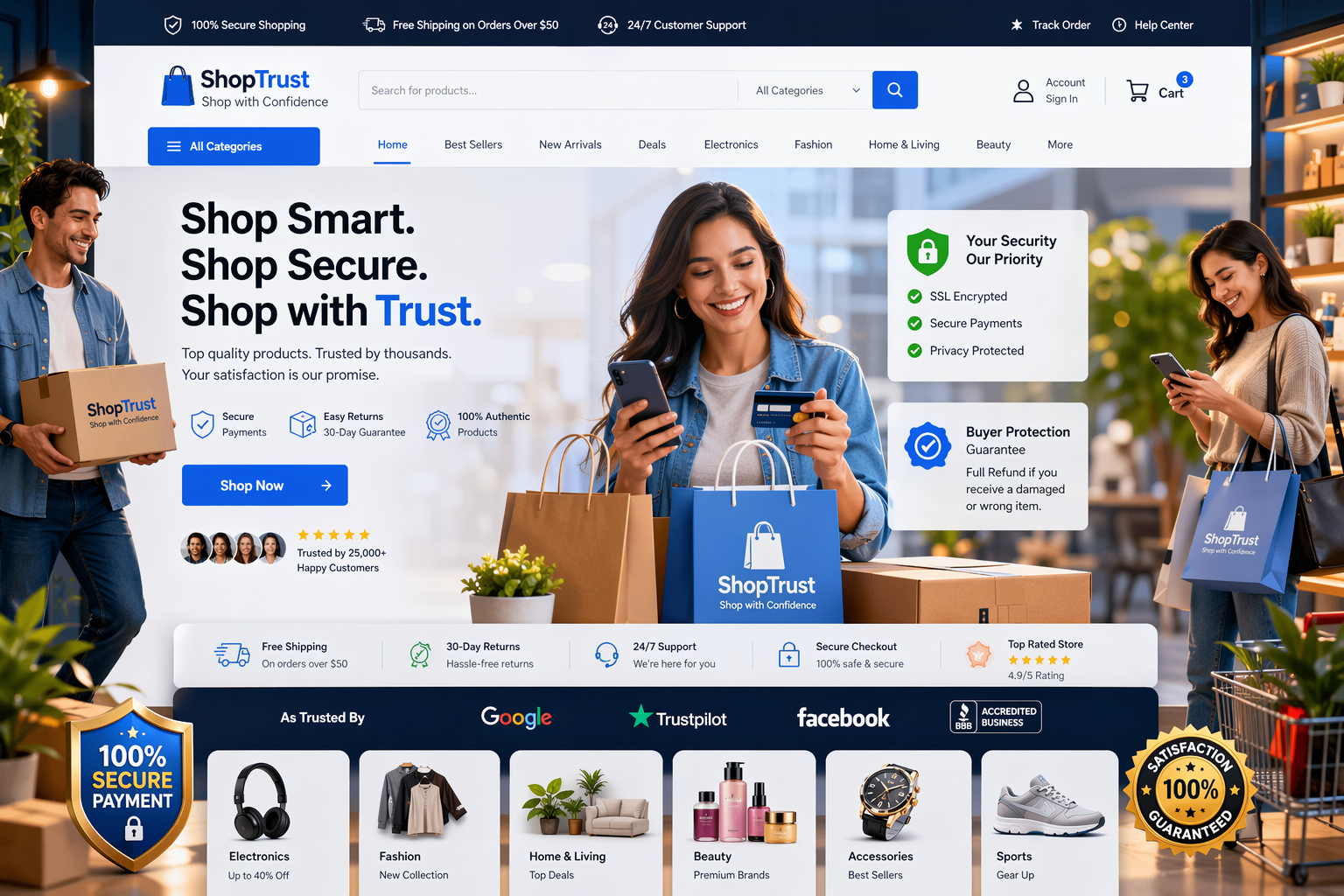
First impressions matter because shoppers use website design to judge if a store looks like a legitimate business. Clean layouts, easy navigation, and well-organized pages make visitors feel more secure. If the site feels messy or outdated, trust can disappear before product evaluation even starts.
Useful trust signals within design often include:
-
HTTPS security and visible checkout reassurance
-
High-quality product images instead of generic visuals
-
Clear contact details and business information
-
Trust badges near checkout or add-to-cart areas
-
Mobile-friendly pages that work smoothly on all devices
Good user experience supports confidence at every step. Fast loading, readable product pages, and simple navigation reduce friction and help visitors focus on buying. Bestseotips often emphasizes that trust and usability work together, because a polished, discoverable site sends a stronger message than words alone.
Pages and Content That Establish Transparency
Transparency grows when shoppers can easily find the information they need. Product pages should clearly explain what the item is, how it helps, and what buyers should expect. Strong visuals and accurate descriptions reduce uncertainty and support better decisions.
A visible return policy is another major trust builder. People want to know what happens if a product is not right for them. When that process is easy to understand and written in plain language, the perceived risk of buying goes down.
Company information also matters. An About page, contact options, and a simple FAQ section help people see the business as real and reachable. These details may seem basic, but they play a big role in showing transparency and giving first-time shoppers a reason to stay engaged.
Displaying Secure Payment and Privacy Information
Payment and privacy details are often the final checkpoint before a customer buys. Even interested shoppers can leave if they do not feel their sensitive customer information is protected. Clear security communication reduces fear and supports stronger trust at checkout.
Stores should show secure payment gateways, explain how privacy information is handled, and make support easy to access. This matters across websites, mobile devices, and even social media platforms where customers may first discover your brand.
| Trust Element | Why It Builds Confidence |
|---|---|
| HTTPS and security seals | Shows the site is protecting data during transactions |
| Secure payment gateways | Reassures buyers that payment information is handled safely |
| Privacy policy | Explains how personal data and email address details are used |
| Visible contact channels | Helps customers feel they can reach support if needed |
| Social media presence | Adds another layer of legitimacy and accessibility |
When buyers see these signals, they are more likely to proceed with confidence.
Proven Strategies to Build and Maintain Customer Trust
Building customer trust takes steady action, not one quick fix. The best practices usually center on three areas: showing proof that others are happy, offering responsive customer service, and reducing risk during payment and returns. Each step helps remove doubt.
Trust also needs maintenance. Once a customer buys from you, every later interaction shapes whether confidence grows or fades. The next sections look at practical ways to use social proof, support systems, and visible protections to keep trust strong over time.
Leveraging Customer Reviews and Social Proof
Customer reviews matter because shoppers tend to trust other people more than brand messaging. When visitors see real feedback, they feel less alone in the buying decision. Social proof reduces uncertainty and gives your store credibility that advertising alone cannot create.
Helpful forms of social proof include:
-
Customer reviews on product pages
-
Customer testimonials with real names or photos
-
Positive experiences shared on social media channels
-
Verified buyer feedback near key products
-
Mentions or features that show outside recognition
These signals make a store feel active, tested, and trustworthy. They also encourage faster decisions because shoppers can see that others already bought and were satisfied. Bestseotips helps businesses strengthen this kind of trust-building content so their online presence supports both rankings and conversions in a natural way.
Providing Responsive and Reliable Support
Responsive support tells customers that your business will not disappear after the sale. That matters because many people judge trust based on whether they can quickly reach a real person when they have a question or problem. Good customer service lowers that anxiety.
Live chat, email, phone support, and communication through social media can all help when used well. A strong support team should answer common questions clearly, stay consistent, and handle more complex issues with confidence. Shoppers notice when support feels prepared.
Reliable customer service also improves the full buying journey. From product questions to delivery updates, fast help creates reassurance. One negative experience can push people away, so being available and helpful is essential. Support is not just a service feature. It is a core trust signal.
Using Trust Badges, Secure Payments, and Clear Policies
Trust badges work because they give shoppers an instant visual cue that your store takes security seriously. When these badges appear near checkout or product pages, they help reduce hesitation at the moment people are deciding whether to move forward.
Secure payment options matter just as much. Buyers want confidence that their customer data, credit card numbers, and payment details are protected. If a store lacks visible payment reassurance, people may leave even when they like the product and price.
Clear policies complete the picture. Return terms, shipping details, and contact information should be easy to find and easy to understand. These simple protections show honesty and reduce perceived risk. Together, trust badges, secure payment, and clear policies create a safer path to purchase.
The Role of Trust in Long-term Customer Relationships
Trust is what keeps customer relationships moving beyond a single order. People return to brands that feel consistent, fair, and easy to deal with. When they know what to expect, they are more comfortable making repeat purchases without starting the decision process from scratch.
It also supports loyalty efforts. A loyalty program can encourage future buying, but only if the business has already earned confidence. The following sections show how trust drives repeat orders, strengthens post-purchase satisfaction, and helps brands recover when problems happen.
How Trust Increases Repeat Purchases and Loyalty
Repeat purchases happen more often when customers feel their earlier orders went smoothly. Positive experiences create a memory of safety and reliability. That memory lowers resistance the next time the shopper sees your products, promotions, or new releases.
Customer loyalty grows because trusted brands feel easier to choose. Buyers do not want to re-evaluate every store from zero. If your business has already delivered what it promised, customers are more likely to stay with you rather than risk disappointment somewhere else.
Over time, this leads to a more loyal customer base. Existing customers are often willing to try new products and can spend more than first-time shoppers. Trust is what makes that possible. It turns single transactions into ongoing habits that support steady sales growth.
Ways to Reinforce Trust Post-Purchase
Trust does not stop at checkout. The post-purchase stage often decides whether the customer experience feels complete or frustrating. Buyers want reassurance that the order is progressing and that help is available if anything changes.
Useful post-purchase actions include:
-
Sending order confirmation right away
-
Sharing tracking updates and shipping alerts
-
Offering easy access to the support team
-
Following up to check customer satisfaction
These steps show customers that your business remains present after payment. That matters because silence can create worry. When people receive updates, clear communication, and reliable support, they feel respected. Those small actions go a long way in reinforcing trust and encouraging future purchases.
Recovering Consumer Trust After Negative Experiences
Negative experiences can damage customer trust quickly, especially online where buyers already start with caution. A delayed response, confusing process, or unresolved issue can make customers feel ignored. If that happens, recovery must be direct and sincere.
The first step is strong customer support. Your customer service team should respond quickly, explain the issue clearly, and offer a practical solution. Customers do not expect perfection every time, but they do expect honesty and effort when something goes wrong.
Recovery also depends on consistency after the fix. If the brand follows through, communicates well, and prevents the same issue from happening again, trust can return. In some cases, a well-handled problem can even strengthen confidence because the customer sees real accountability.
How Bestseotips Helps E-commerce Businesses Cultivate Trust
Bestseotips helps each ecommerce business build trust where many shoppers first look: online search. The compiled information makes it clear that bad SEO can make a legitimate store seem doubtful, while strong rankings help people see the brand as real and credible. That is why SEO is not only about traffic. It is also about trust, visibility, and first impressions.
Beyond rankings, Bestseotips supports a stronger online presence by helping businesses present themselves clearly to the right audience. When shoppers can find your store, review your content, and move through a credible website with confidence, you create more satisfied customers. If you want expert support that improves trust and performance, visit www.bestseotips.org and take the next step.
Enhanced Online Presence Through Strategic SEO
Strategic SEO improves trust because it helps shoppers find your brand when they are actively researching whether to buy. If your store appears strongly in search results, people are more likely to see it as established and dependable. That perception matters from the very beginning.
A better online presence also brings in more relevant website traffic. Instead of attracting random clicks, good SEO helps connect your store with a target audience that is already interested in your products. This creates stronger engagement and a smoother path to conversion.
Bestseotips understands this link between search visibility and buyer confidence. Their approach helps businesses become easier to find, easier to evaluate, and easier to trust. For e-commerce brands that want stronger authority and more qualified visitors, Bestseotips offers professional support that turns search performance into real business value.
Case Studies: Trust-building Success Stories with Bestseotips
Trust-building success stories usually follow a clear pattern. A business improves visibility, strengthens credibility signals, communicates better, and then sees stronger buyer response. The compiled information shows that when customers trust a brand, they buy more, return more often, and recommend it to others.
That is the kind of outcome Bestseotips works toward. Their focus on SEO and online presence supports the conditions that help e-commerce stores earn confidence, from stronger discoverability to a more professional reputation across search and social media channels.
These case studies are not just about rankings. They are about business results tied to trust: better sales potential, more confident shoppers, and improved loyalty supported by exceptional customer service and clearer digital visibility. To build similar momentum for your brand, visit www.bestseotips.org today.
Frequently Asked Questions
How do reviews and secure payment methods boost e-commerce trust?
Customer reviews act as trust signals because online shoppers believe real buyer feedback more than brand claims. Secure payment methods reduce fear about fraud and data misuse. Together, they increase customer trust by showing that others had good experiences and that checkout is safe.
What’s the best way to recover customer trust after a negative review?
The best response is fast, honest, and helpful. Address the issue clearly, show strong customer service, and offer a real solution. When an online store handles negative experiences with respect and follow-through, it can rebuild customer trust and improve the overall customer experience.
Which trends are shaping trust in online shopping for 2024?
Key trends include stronger focus on data protection, smooth experiences on mobile devices, and visible engagement through social media. Shoppers also expect clear support, secure payments, and easy-to-find business information. These factors increasingly shape customer trust in online shopping decisions.
Conclusion
In conclusion, trust is the cornerstone of e-commerce success. It influences purchase decisions, fosters customer loyalty, and drives business growth. As consumers increasingly turn to online shopping, building and maintaining trust becomes paramount. By addressing common consumer concerns, leveraging social proof, and ensuring a secure shopping experience, businesses can create a credible online presence that inspires confidence.
At Bestseotips, we understand the nuances of cultivating trust in the digital marketplace. Our strategic SEO solutions and proven case studies demonstrate our commitment to helping e-commerce businesses thrive. Don’t underestimate the power of trust—visit www.bestseotips.org today for professional services that can elevate your online business and build lasting customer relationships.